
Newsroom
Actually Coolfly Safe: The Brilliant Secret of Unique Propfans
Actually Coolfly Safe: The Brilliant Secret of Unique Propfans
The Big Question: What is Coolfly eVTOL Aircraft Safety?
I am a designer at Coolfly, and I spend a lot of time watching people react to our new flying vehicle. When people first see an electric VTOL aircraft, they usually ask one of two questions: “How high can it go?” or “Is it safe?” Both questions are important, but safety is the foundation. To answer it, we need to look at one of the most critical parts of any VTOL machine: the blades.
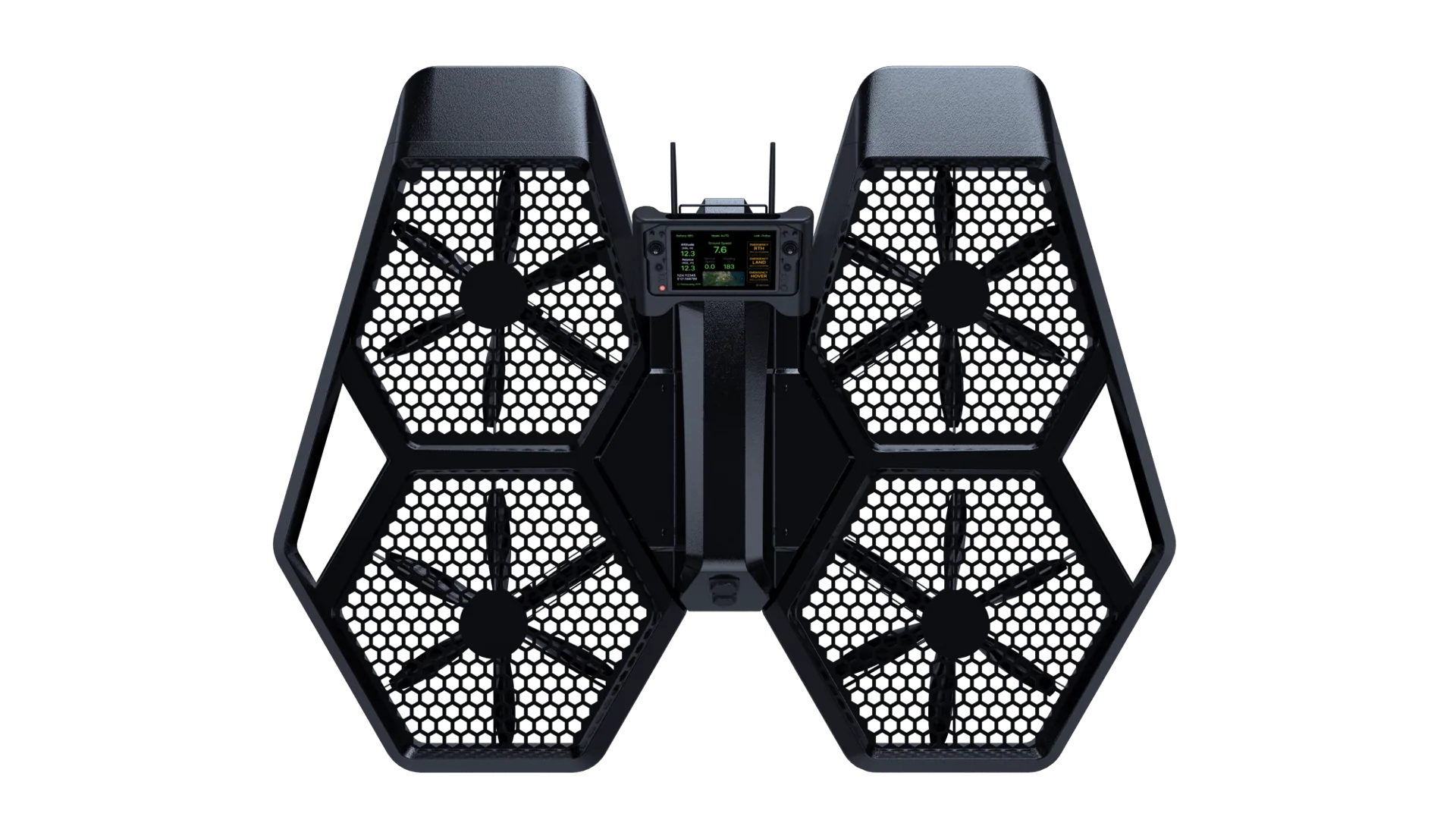
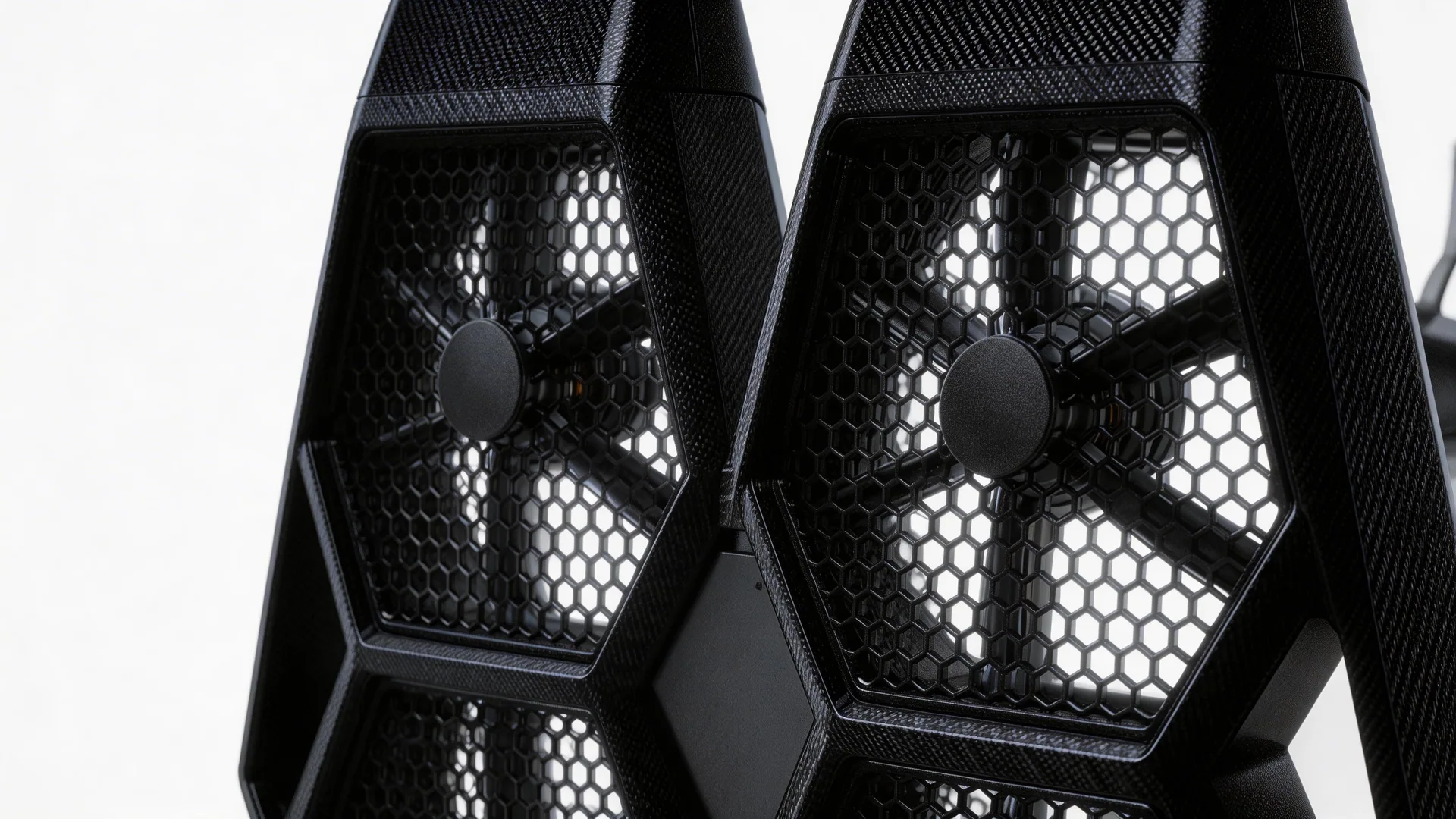
VTOL stands for Vertical Take-Off and Landing. It means the aircraft can lift straight up, like a bird rising from the ground. Most VTOL craft today use open rotors, which look like the exposed spinning blades on a helicopter or drone. At Coolfly, we chose a different path: we hide our blades inside a protective ring. We call this an enclosed propfan, or ducted fan. In this article, I want to explain why this choice matters for the future of safe, everyday flight.
The Problem with Open Blades in Real Cities
If you look at a traditional drone or helicopter, you see open spinning blades made from hard materials such as carbon fiber or metal. In controlled test environments, these open rotors can perform very well. But the real world is not a laboratory.
Cities are full of obstacles and surprises: trees, power lines, street signs, balconies, and birds. There are also people, pets, and children who can walk close to a landing area. If an open blade hits even a small branch or loose object, it can shatter. That can cause a sudden loss of lift and put the entire aircraft at risk. Even more importantly, open blades are extremely dangerous to anyone standing nearby.
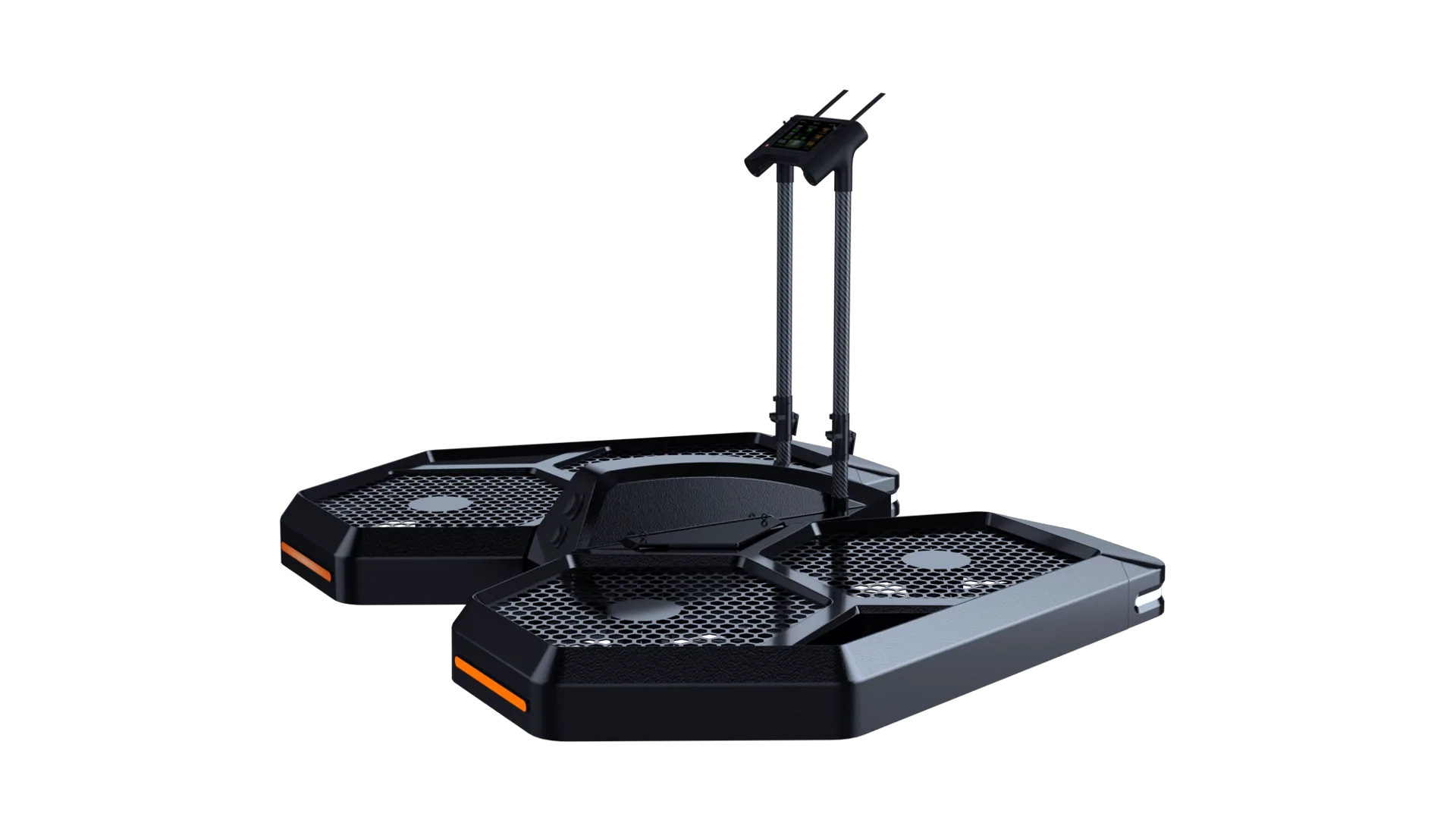
During my research, I studied many drone accidents and incident reports. A large number of injuries happened, because someone accidentally touched a spinning rotor or stood too close during take-off and landing. Coolfly is designed to be part of daily life, not a piece of equipment that only lives at an airfield. We want you to be able to land in your driveway, at a local park, or near a beach. That means we simply cannot accept “flying knives” spinning near your legs.
By placing the blades inside a solid protective shroud, we remove this hazard from normal operations. The ring becomes a physical barrier between people and the propellers. You can stand next to a Coolfly vehicle while the motors are running and feel protected. This physical separation is the first step toward making personal flight as normal and approachable as riding an electric scooter.
Safety First for a Coolfly Standing Rider
Our aircraft is unique because the pilot stands upright, like riding a board. This standing posture gives excellent visibility and a natural sense of balance. But it also brings a new design challenge: the rider’s feet and legs are much closer to the propulsion system than in a traditional seated cockpit.
Very early in the design process, we set ourselves a clear goal: create a “human-first” architecture that minimizes risk around the rider’s body. If you shift your weight, adjust your stance, or even stumble slightly while the machine is powered, you should not have to worry about contacting a spinning propeller.
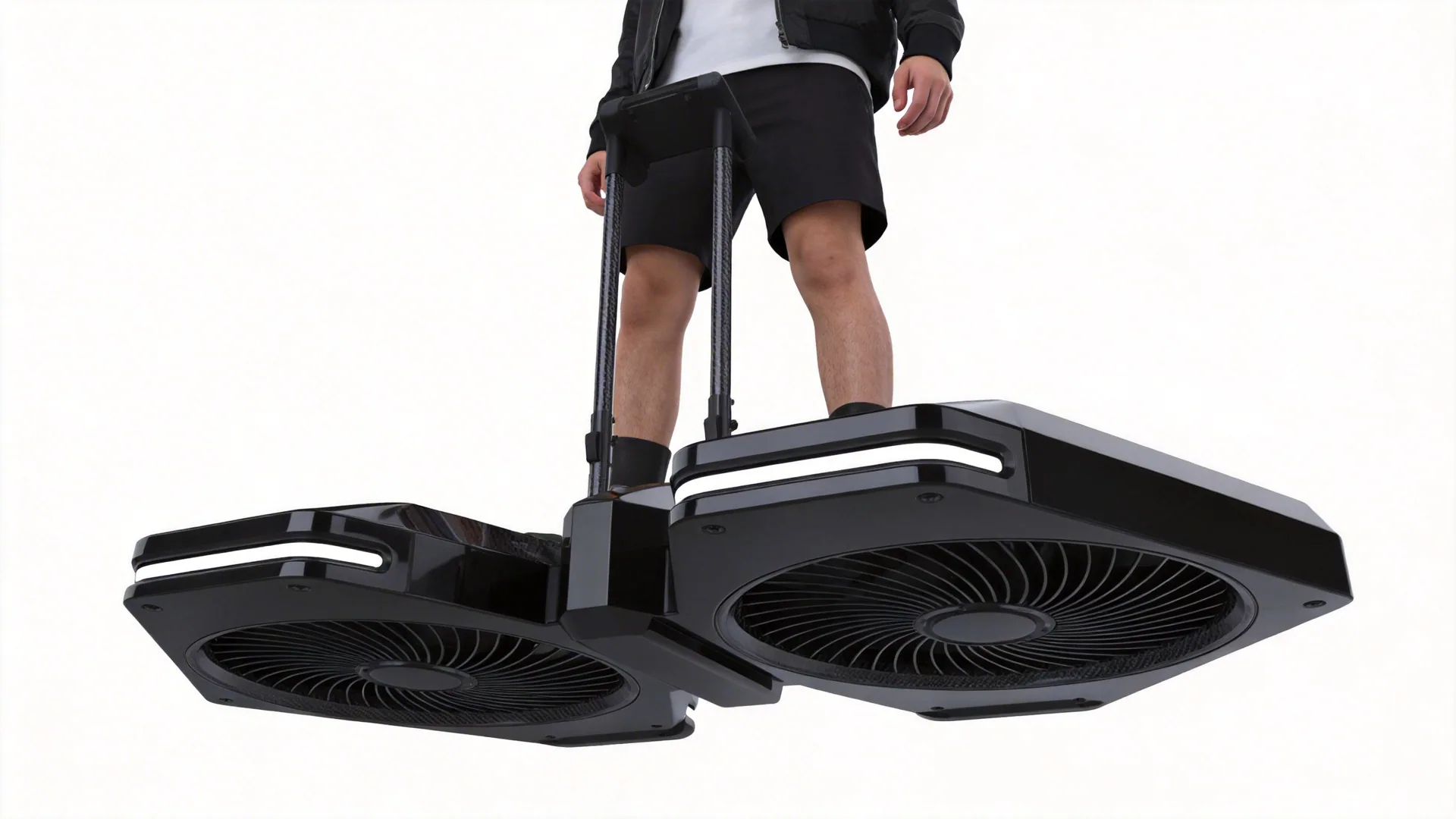
The enclosed propfan gives us exactly that. The duct works like a protective wall between the human and the moving parts. Over many user tests, we also noticed a psychological effect. When riders cannot see exposed blades spinning near their toes, they relax. When they do see sharp edges moving at high speed, their bodies become tense, even if the system is technically safe. Tension leads to overcorrection and mistakes.
By hiding the blades, the Coolfly board feels like a solid, floating platform, not a machine full of spinning weapons. This calm mental state allows the rider to focus on what really matters: interacting with our AI-based gravity-sensing flight control system. They can simply lean into the direction they want to go and enjoy the sensation of “surfing the sky,” instead of managing fear.
Coolfly Cutting the Noise for Urban Neighbors
Noise is one of the biggest obstacles for the low-altitude economy. If thousands of people fly to work or play every day, the sound of those vehicles will shape how cities accept or reject this new technology.
Traditional open propellers generate a very distinct, often unpleasant sound. A lot of this noise comes from the tips of the blades cutting through the air and forming tiny spinning tunnels of air called tip vortices. These vortices create high-pitched buzzing and “whining” that travels far and easily annoys people on the ground.
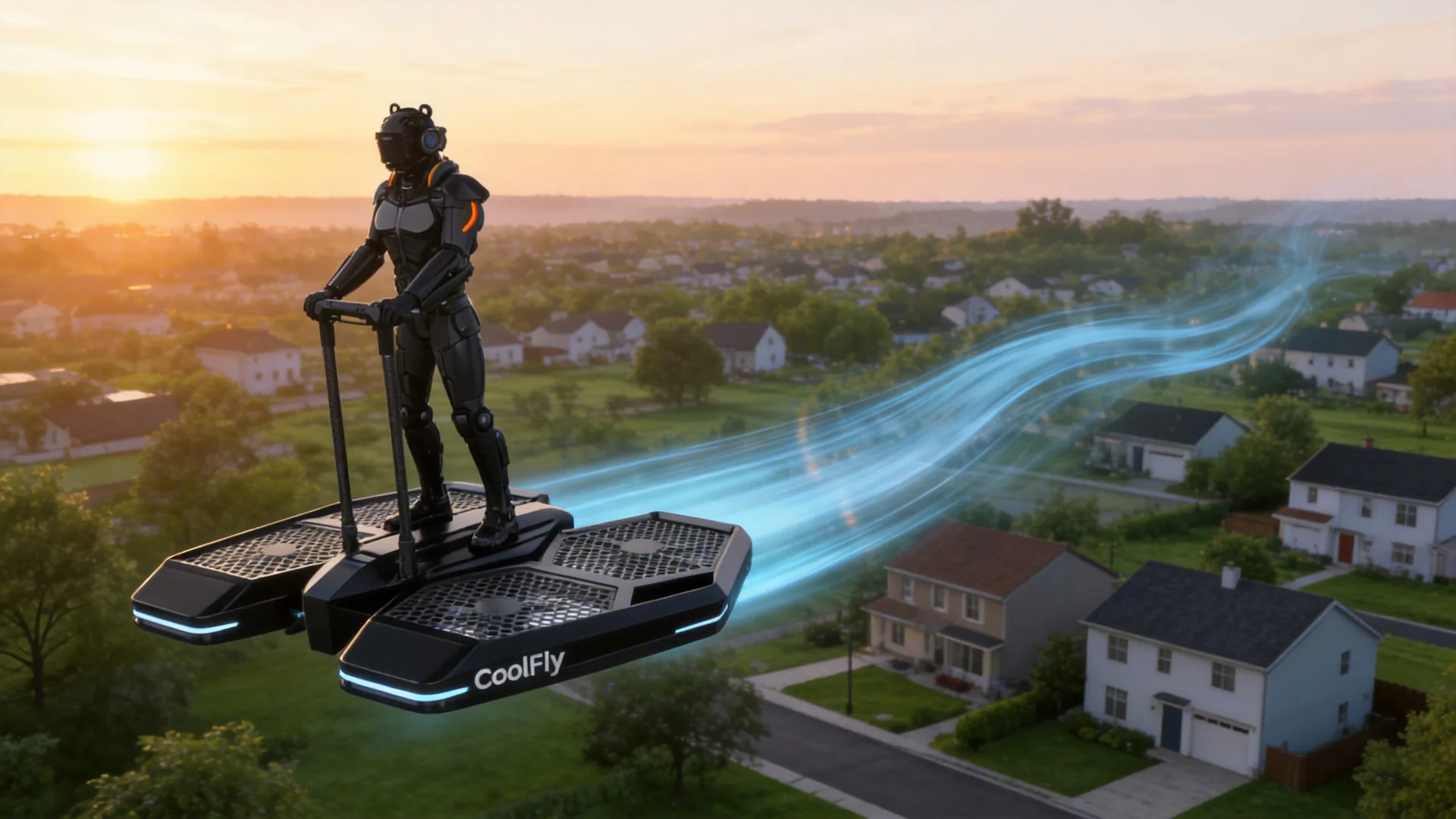
Enclosing the fan helps us fight this noise at the source. The shroud, or duct, acts like an acoustic buffer. It shields the blade tips, guides the airflow, and reduces some of the tip vortices that make the most irritating sounds. In our flight tests across different environments, we observed that well-designed enclosed fans can be significantly quieter than open rotors of the same size.
This makes the Coolfly aircraft more “neighbor-friendly.” Our goal is to fly over quiet neighborhoods without waking people up or disturbing conversations. If we want governments and communities to welcome electric VTOL travel, we must show that we can reduce both risk and noise. The duct is one of our most powerful tools for creating a quieter sky.
How Ducts Help Electric VTOL Aircraft Work Better
Some people look at our design and ask a very reasonable question: “If you add a heavy ring around the fan, doesn’t that make the aircraft less efficient?” At first glance, it seems like the shroud is just extra weight. However, the physics of a ducted fan offers a hidden advantage.
When a fan spins inside a carefully shaped duct, the system creates a pressure difference between the air inside the duct and the air outside. The lip and inner surface of the duct guide the airflow and can increase the effective thrust of the fan. In practice, a well-designed duct can provide a noticeable thrust boost compared to an open fan of the same diameter.
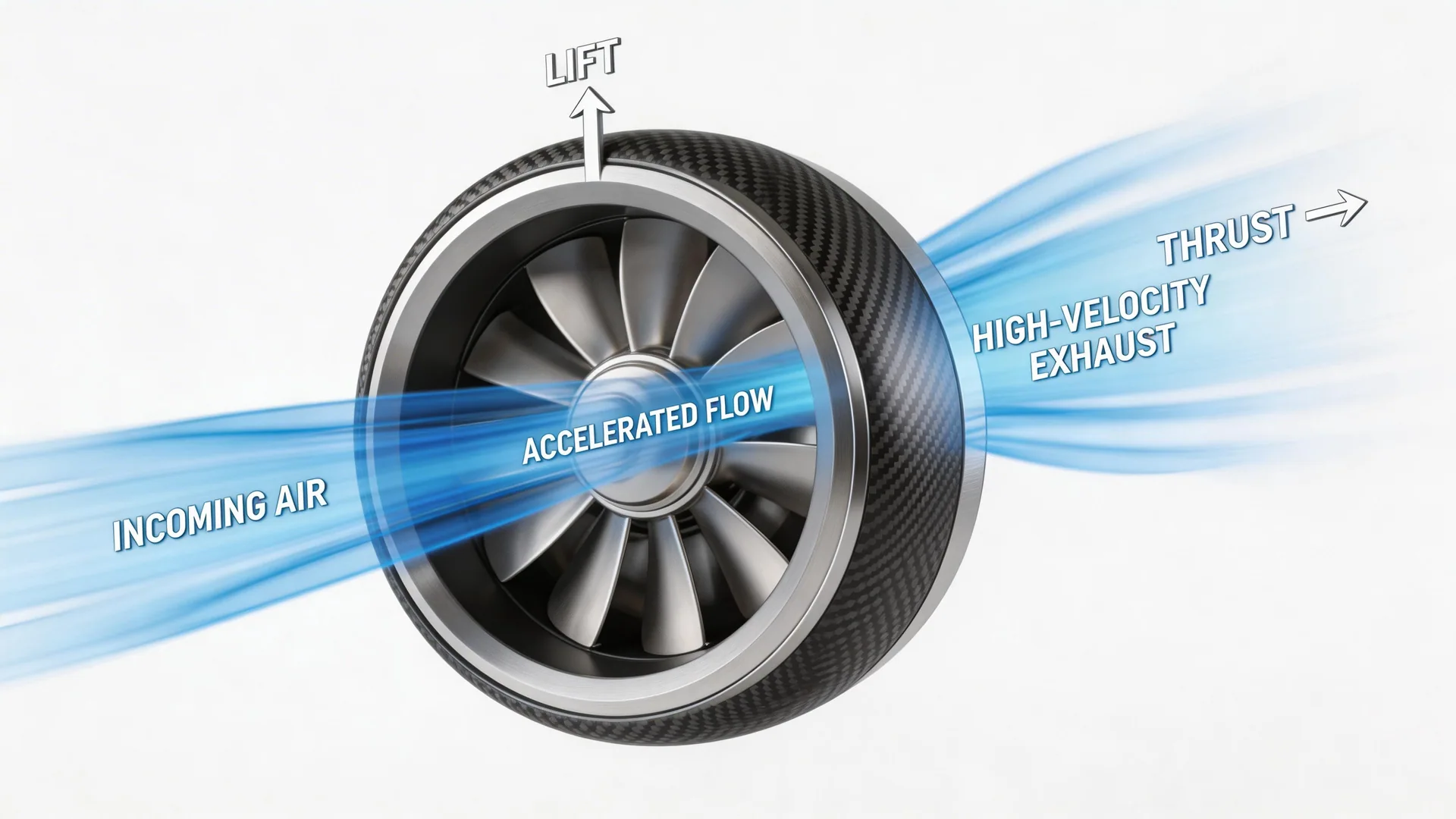
This additional thrust is extremely important for us. Coolfly is designed to follow FAA Part 103 ultralight rules in the United States, which limit the empty weight of the vehicle to 254 pounds (about 115 kg). That means every kilogram of structure matters. By using the duct to generate more lift and thrust, we can choose smaller, lighter motors and optimize the overall system. We add some weight with the shroud, but we gain extra performance, better control, and more safety in return. This trade-off helps the vehicle carry a rider up to around 110 kg while staying within strict weight limits and using less battery energy per flight.
Shrinking the Footprint for Tight Urban Spaces
Cities do not have much unused space. If we want VTOL vehicles to operate close to where people actually live and work, the aircraft must fit into tight environments. Sidewalks, rooftop terraces, parking spaces, and small yards are all potential launch and landing spots.
Open propellers are a problem in these tight spaces. They need a large “safety bubble” so that the blades never contact walls, poles, or vehicles. If an open propeller touches even a soft object, the flight can end immediately.
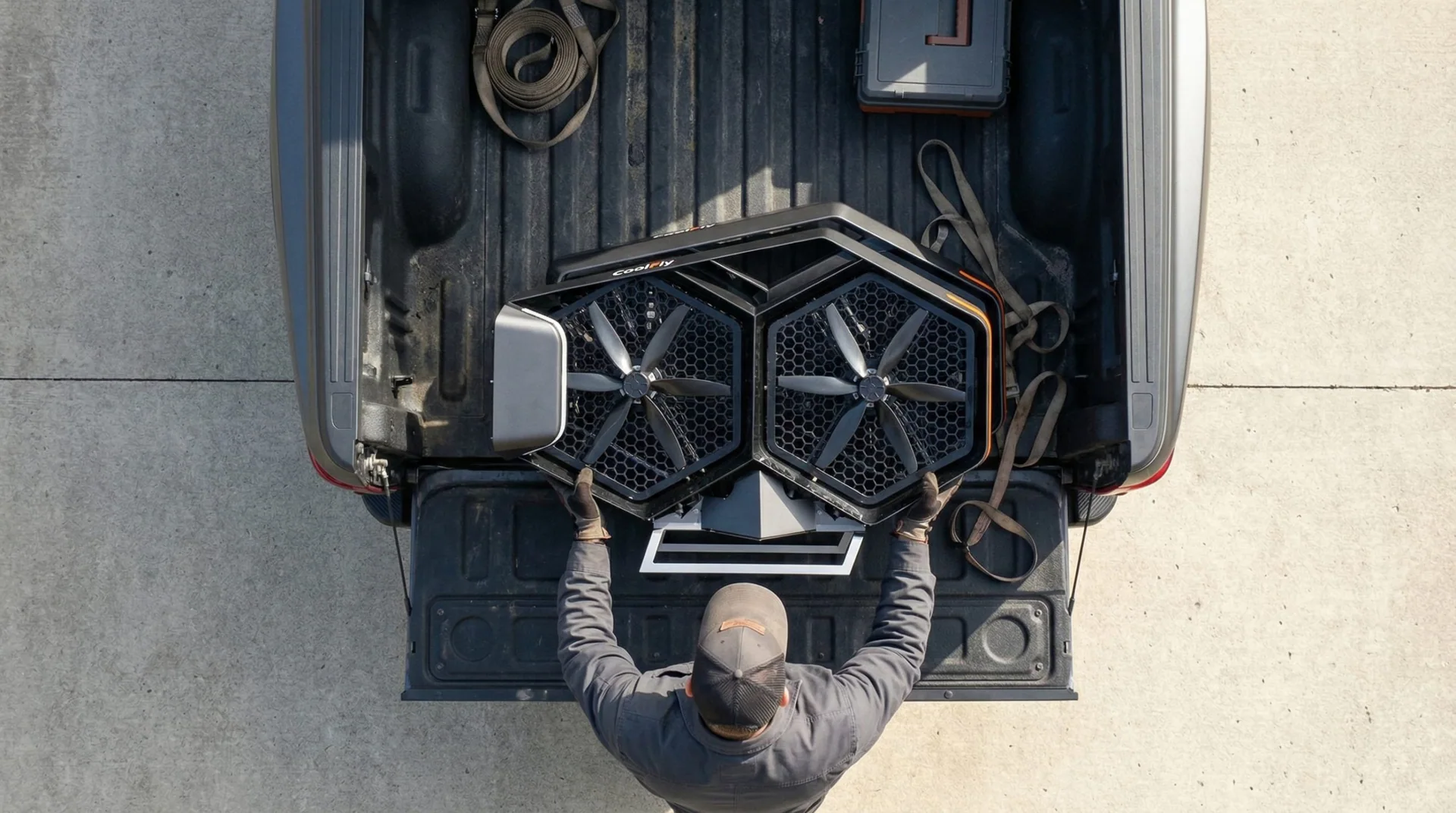
Because Coolfly uses enclosed propfans, the outer ring of the aircraft becomes a solid, predictable edge. In low-speed ground operations, it behaves more like a bumper than a blade. The ducts allow us to design a much smaller operational footprint. We can make the vehicle compact enough to move through a standard doorway or fit into a small elevator or garage. That kind of portability is essential if personal VTOLs are going to coexist with everyday urban life, instead of being locked away at distant airfields.
The Future of Quiet, Human-Centric Urban Flight
The world is moving away from noisy, fuel-burning helicopters toward cleaner, smarter electric VTOL aircraft. But this transition will only succeed if we address people’s core concerns about safety, noise, and daily usability.
At Coolfly, we believe the enclosed propfan is one of the most powerful tools we have. It protects the rider,protects people on the ground. And it reduces noise and shrinks the footprint of the vehicle. It turns a complex flying machine into something that feels approachable, familiar, and trustworthy.
We are still pushing this technology forward. And we are testing new materials to make the ducts lighter and stronger. We are using AI and simulation to refine the inner shapes of the shroud for better airflow and lower noise. Industry observers have already noticed this shift. Aerospace Global News, for example, has described the move toward shrouded rotors as a significant trend in the micro‑mobility side of aviation.

For us, this is not just about building a cool gadget. It is about building a professional tool for the emerging low‑altitude economy and a new way of moving through our cities. We want flying to feel natural, intuitive, and safe—something you can imagine doing every day, not just once in your life.
The next time you see a Coolfly board, I hope you will see those solid rings in a new way. They are not just a design detail. They are there to protect you, your neighbors, and your city. The sky is coming closer to our daily lives, and our job is to make sure it remains a safe, quiet, and beautiful place for everyone.