
Newsroom
eVTOL Breakthrough: The Most Surprising Way to Master Time
eVTOL Breakthrough: The Most Surprising Way to Master Time
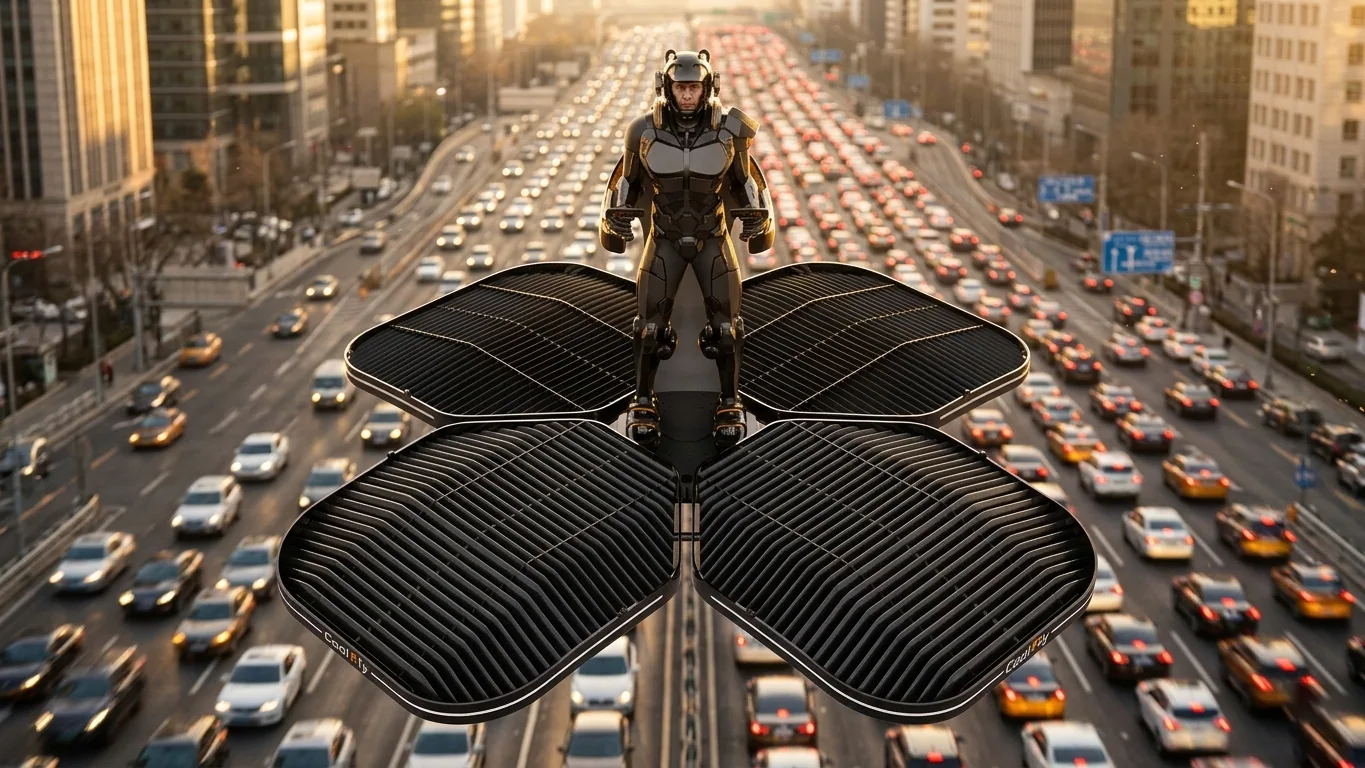
eVTOL technology is no longer a concept for the distant future because the Coolfly test group has recently verified the real-world performance metrics of its pioneering standing flight vehicle. For the modern professional, the most valuable resource is time. However, the current state of urban infrastructure is failing to protect this resource. Because ground-based traffic has reached a point of permanent saturation, the only logical solution is to move into the third dimension. By utilizing center-of-gravity (CoG) sensing and high-efficiency electric propulsion, this vehicle offers a personal flying vehicle for faster daily commute that can bypass the chaos of the streets.
Defining the New Standard: What is eVTOL Aircraft?
To understand the impact of this vehicle on your schedule, we must first answer the question: what is evtol aircraft and how does it optimize travel? An evtol is an Electric Vertical Take-off and Landing vehicle. These vtol aircraft use electricity to power multiple rotors, which allows them to lift off from very small spaces. Because the Coolfly is an electric vtol aircraft, it does not need a long runway or a massive hangar. Instead, it is designed to fit into the existing urban landscape.
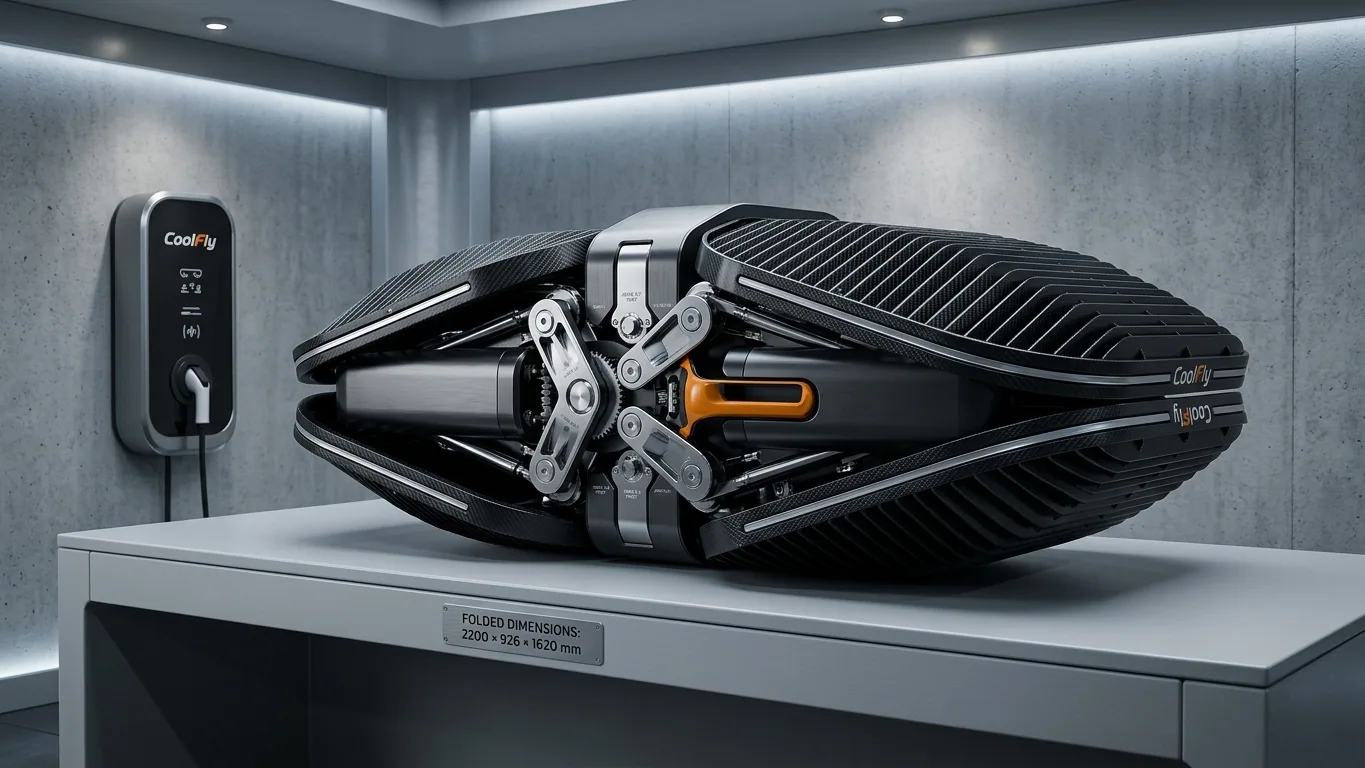
The physical specifications of the Coolfly are particularly impressive because they solve the "storage problem" that plagues larger aircraft. When the vehicle is folded, its dimensions are just 2200 × 926 × 1620 mm. This compact footprint means you can store the vehicle in a standard parking space or even on a large balcony. Since the vehicle is so small, you do not waste time traveling to a distant airport to start your journey. You can start your flight closer to your home or office. Therefore, the total "door-to-door" travel time is significantly lower than any other form of private aviation.
Speed in the Sky: eVTOL vs Ground Transport Travel Time Comparison
The most critical metric for any commuter is speed. During extensive field trials, the Coolfly test group confirmed that the standing flight vehicle reaches a maximum speed of 70 km/h. While 70 km/h might seem comparable to a car on a highway, the reality of an eVTOL vs ground transport travel time comparison is much more dramatic. A car must follow winding roads, wait at red lights, and navigate through intersections. Because of these obstacles, the "average" speed of a car in a city like London or New York often drops below 15 km/h during peak hours.

In contrast, the Coolfly vehicle travels in a perfectly straight line. Because there are no traffic jams in the low-altitude sky, a 10-kilometer trip at a constant 70 km/h takes less than 9 minutes. The same trip in a car during rush hour could easily take 45 minutes or more. This represents a massive point to point aerial travel time savings. You are not just moving faster; you are moving more efficiently because you have eliminated every stop-and-go delay that defines ground transport.
Avoiding Rush Hour Traffic with Urban Air Mobility
The ability of avoiding rush hour traffic with urban air mobility will fundamentally change how businesses operate. As we look toward the fastest way to travel from airport to city center 2026, the vtol aircraft emerges as the only viable choice for high-value travelers. Most major airports are surrounded by heavy industrial traffic and congested highways. A traveler arriving at an airport usually spends an hour or more in a shuttle or taxi just to reach the central business district.
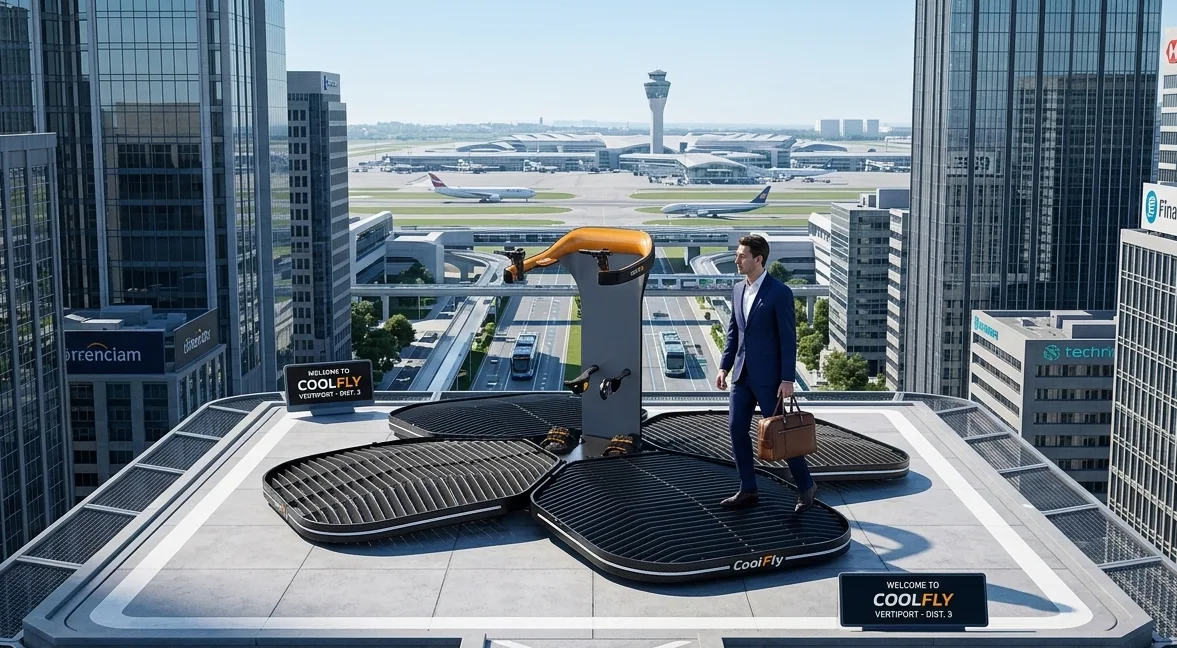
However, if that traveler uses a Coolfly eVTOL, they can bypass the entire highway system. Because the vehicle is so compact, it can land at small vertiports located directly in the city center. Since the top speed is 70 km/h and the path is direct, the traveler can reach their meeting in a fraction of the time. This efficiency is the core promise of the future of urban air mobility. If you can reduce a 90-minute struggle in traffic to a 15-minute scenic flight, you have gained over an hour of productive time.
Intuitive Control: The CoG Sensing Advantage
Time is also saved on the ground because of the intuitive nature of the CoG sensing system. Traditional helicopters require complex pre-flight configurations and highly skilled pilots. But the Coolfly system is designed for the individual. Because the flight control is based on the pilot's natural balance and center of gravity, the learning curve is extremely short.

When you step onto the platform, the onboard sensors calibrate your position instantly. Since the controls are so intuitive, the "startup to takeoff" sequence is very fast. You do not spend 20 minutes sitting on a tarmac running through checklists. Instead, you power up and lift off. This rapid deployment is essential for a personal flying vehicle for faster daily commute. The goal is to make flying as simple as walking, but much faster. Because the software handles the complex physics of stabilization, the pilot can focus on the destination rather than the mechanics of flight.
Reclaiming the Lost Hours
In conclusion, the Coolfly eVTOL is more than just a vehicle; it is a solution to the global crisis of wasted time. By combining a 70 km/h top speed with a folded size of 2200 × 926 × 1620 mm, Coolfly has created the most practical vtol solution for the modern city. The data from our eVTOL vs ground transport travel time comparison makes it clear that ground transport is a relic of the past.

As we move toward 2026, the point to point aerial travel time savings will become the new standard for urban success. By choosing to fly, you are choosing to exit the gridlock and enter a world of efficiency. The sky is open, and with Coolfly, it is now the fastest way to get where you need to be.