
Newsroom
eVTOL Success: The Best Proven Strategy for Coolfly Mastery
eVTOL Breakthrough: The Most Surprising Way to Master Time
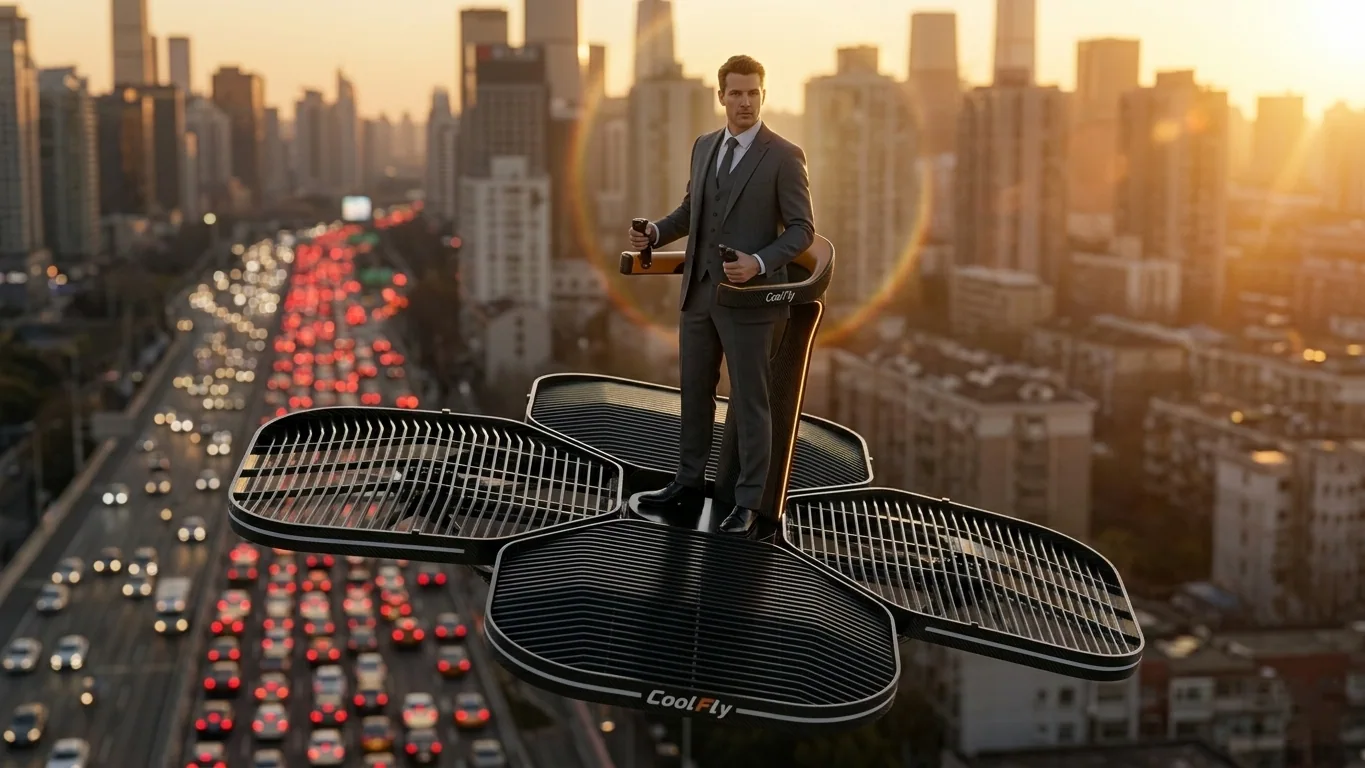
Coolfly evtol is the name that will soon be synonymous with reclaiming your most valuable asset: time. We have all spent far too many hours staring at the brake lights of the car in front of us, trapped in a gridlock that feels like a permanent fixture of modern life.
While the industry has spent decades talking about the future of transportation, the conversation is finally shifting from "can we fly?" to "can we afford to fly every single day?" To answer that, we have to look past the sleek carbon fiber and dive into the hard numbers of commercial viability and the actual lifestyle shift this technology offers.

The Commuter’s Question: What is eVTOL Aircraft for You?
To understand why this matters for your morning routine, we first need to define what is vtol aircraft technology in a way that relates to your garage, not a NASA laboratory. A vtol aircraft (Vertical Take-Off and Landing) is essentially a vehicle that eliminates the need for a runway. But for the individual buyer, the Coolfly standing vehicle is much more than that. It is a compact, personal mobility tool that fits into the footprint of a standard motorcycle.
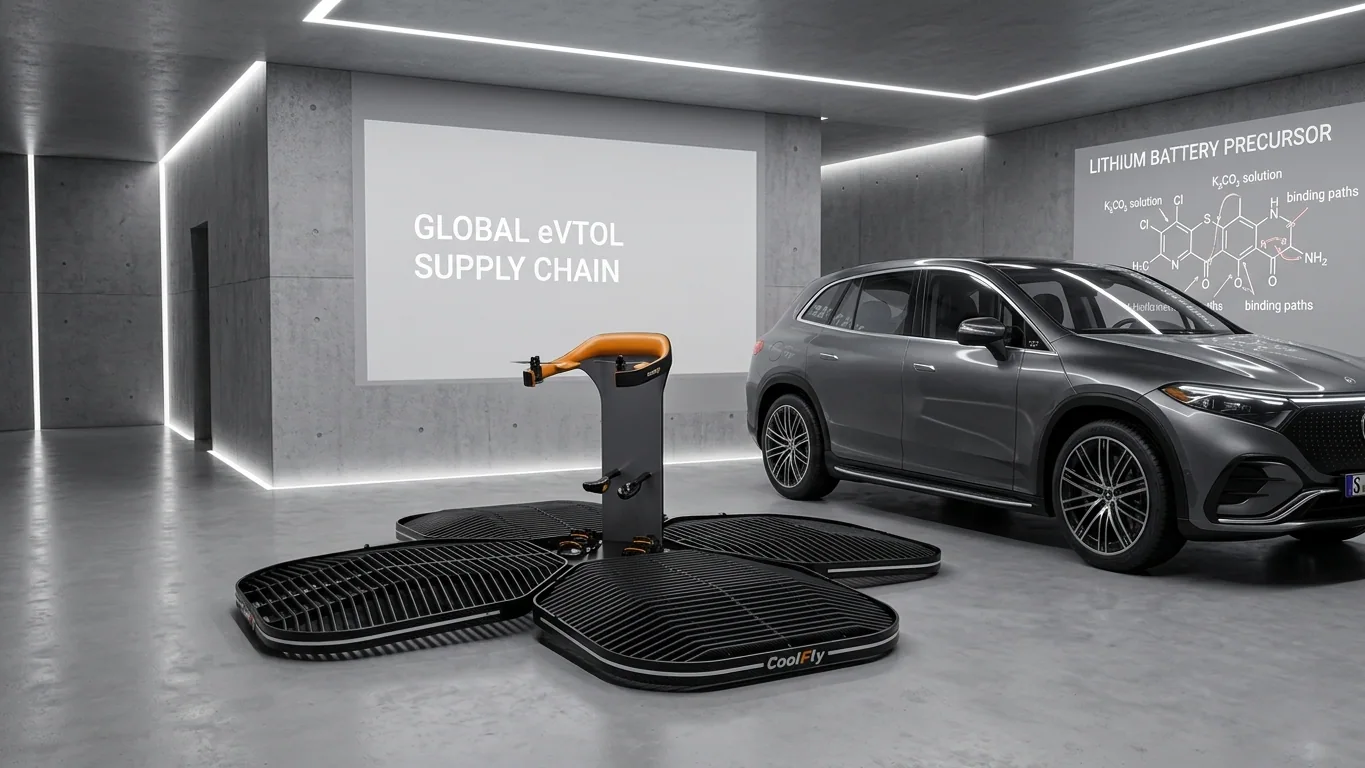
Traditional evtol designs are often massive, multi-passenger "air taxis" that require dedicated ports and commercial pilots. The Coolfly architecture is different. By utilizing a "standing" configuration and center-of-gravity (CoG) sensing, it removes the dead weight of heavy seats and complex cockpits. For you, this means a vehicle that can actually be stored in a home garage and launched from a driveway or a small backyard pad. The economic viability starts here—with the elimination of expensive hangar fees and specialized airport logistics.
How Do eVTOL Aircraft Work for Your Wallet?
A major hurdle for any new technology is the long-term cost. Many people ask, "how do electric vtol aircraft work in terms of maintenance?" If you own a high-end European sports car, you are familiar with the "check engine" light that costs five thousand dollars to turn off. The Coolfly propulsion system is a radical departure from that headache.
Because it is an electric vtol aircraft, it does not have the thousands of moving parts found in an internal combustion engine. There are no oil changes, no spark plugs, and no complex transmissions to fail. The heart of the vehicle consists of brushless DC (BLDC) motors powered by rare-earth magnets. These motors are incredibly efficient and, more importantly, they are durable. In terms of "Personal Flight Economics," the cost per mile is driven almost entirely by electricity prices and battery cycle life.
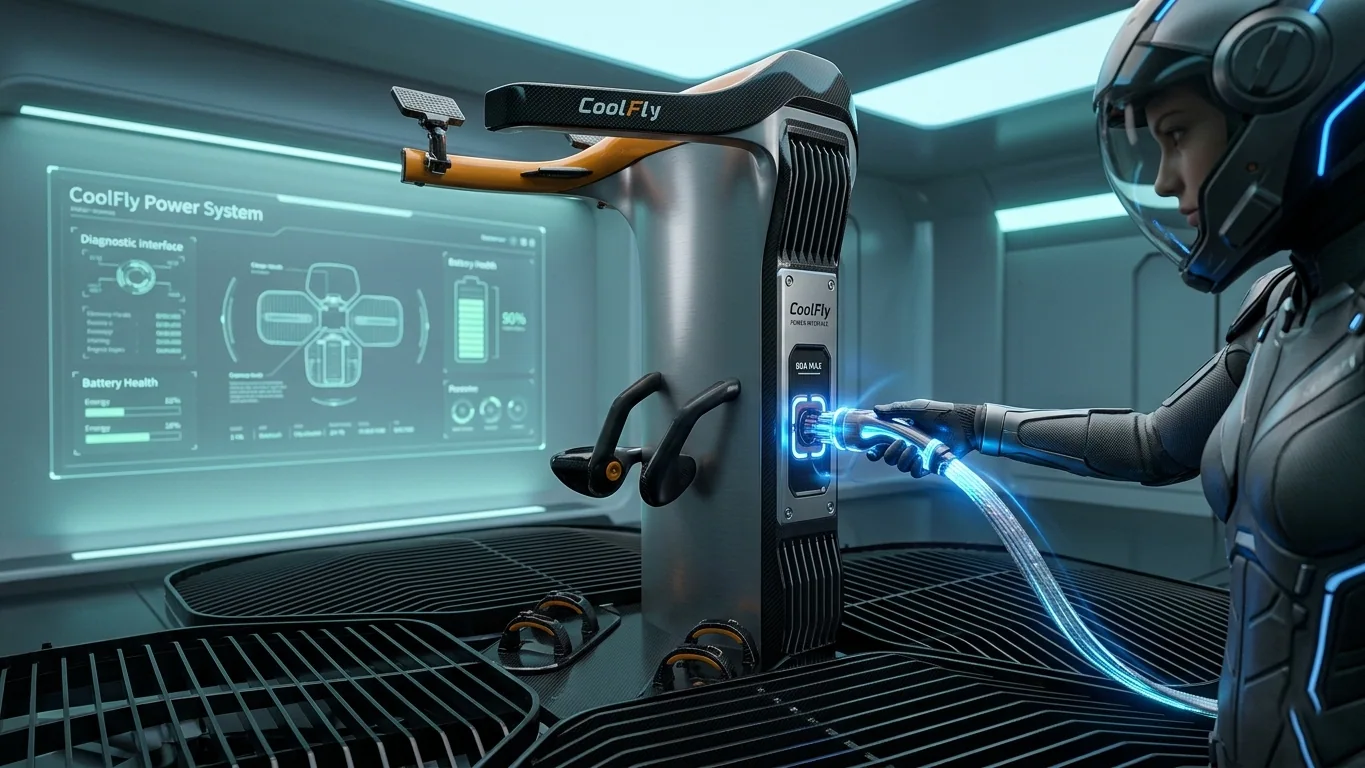
When you compare the cost of charging a Coolfly to the cost of premium gasoline for a luxury SUV, the flight vehicle often wins. Research by the Vertical Flight Society suggests that electric propulsion can reduce direct operating costs by up to 40% compared to traditional light helicopters (VFS, "Electric VTOL News"). For a business professional, this isn't just a cool gadget; it is a calculated investment in efficiency.
The Structural Reality: Coolfly and Material Stability
The price you pay for a vehicle is often a reflection of its supply chain. This is where the Coolfly strategy becomes a major selling point for a savvy buyer. The airframe is constructed from T800 grade carbon fiber.
Now, why does that matter to you? It matters because T800 offers the perfect balance of extreme lightness and industrial-grade toughness. It is the same material used in modern long-haul jets to ensure they can fly for 30 years without structural failure.

By securing long-term agreements for these raw materials, Coolfly ensures that the price of the vehicle—and its replacement parts—remains stable. We have seen how global chip shortages and shipping delays can leave car owners waiting months for a simple repair.
Coolfly’s focus on "near-shoring" and localized component manufacturing means that when you need a sensor or a propeller, it is available. Commercial viability is built on the foundation of being able to actually use your vehicle every day, not leaving it in a repair shop waiting for a part from across the ocean.
A Typical Morning: Visualizing the Commercial Utility
Let’s look at a real-world scenario. Imagine you live 20 miles from your office. In a city like Los Angeles, London, or Shanghai, that 20-mile commute can easily take 90 minutes during rush hour. That is three hours of your life gone every single day.
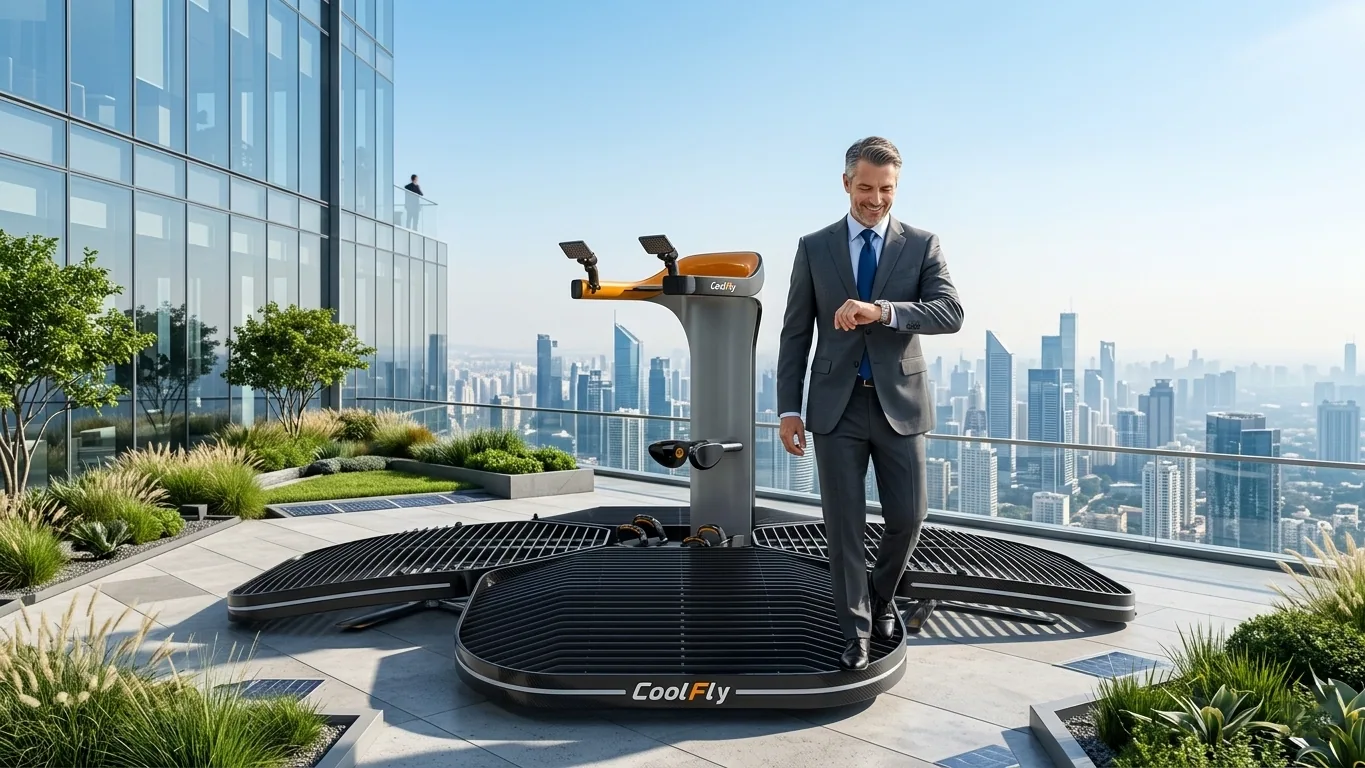
With a Coolfly, that 20-mile trip is a straight line at 60 miles per hour. You are at your desk in 20 minutes. You arrive fresh, not frustrated by traffic. From a business perspective, if your time is worth $100 an hour, you are "saving" $200 a day in lost productivity.
Over a 250-day work year, that is $50,000 in recovered time. When you run these numbers, the "Total Cost of Ownership" starts to look less like an expense and more like a high-return asset. This is the core of future urban mobility: turning wasted time into billable hours or family time.
The eVTOL Safety and Training Factor
The biggest barrier to entry for most people is the fear of complexity. "I’m not a pilot," is the most common refrain. But the "intuitive flight" system in the Coolfly changes the game. Because the vehicle responds to your natural body movements—much like a high-tech Segway for the sky—the learning curve is drastically shortened.

While you will still need to understand the rules of the air, you won't need to master the hundreds of dials and switches found in a Cessna.
The onboard "Coolfly brain" handles the complex stabilization mathematics in real-time. This reduces the "intellectual cost" of ownership. You don't need to spend $20,000 and two years in flight school just to commute. This accessibility is what will drive the mass adoption of vtol aircraft.
Is it Time to Consult the Future?
We are at a tipping point. The technology is no longer the bottleneck; the only remaining hurdle is the decision to step out of the traffic and into the sky.
The Coolfly standing eVTOL is the first vehicle designed specifically to meet the economic and spatial realities of an individual’s life. It is built with aerospace-grade materials, powered by low-maintenance electric systems, and designed to fit into a modern urban lifestyle.
When you look at the stability of the raw material supply and the diminishing costs of battery technology, the argument for personal flight becomes undeniable. This is not a dream of the 22nd century; it is a commercial reality being built today.
If you are ready to stop calculating your life in terms of traffic delays and start measuring it in terms of freedom, it is time to look closer at the Coolfly.
The sky is no longer a destination; it is your new commute.