

Newsroom
Redefining Flight: CoolFly’s Somatic-Controlled eVTOL Systems
Hi,everyone,this is the guide to let you know CoolFly's eVTOL innovation
Personal flight innovation has been sabotaged by the high learning curve required to fly and the intricate aviation needs that have been established.
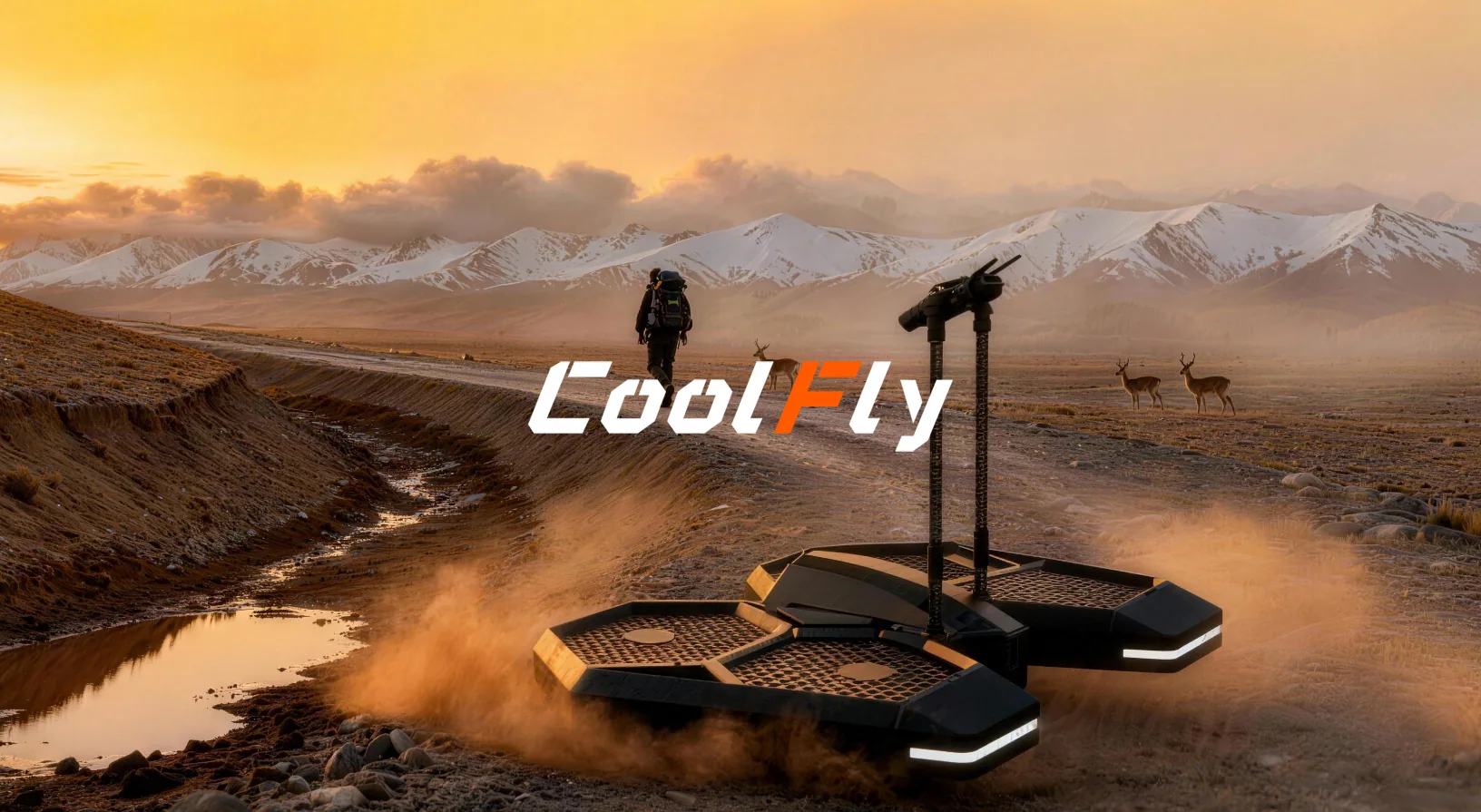
With the coming of CES 2026, the discussion has changed to What is the ease of flying a craft as opposed to Will the craft fly. CoolFly (Zhejiang) Aircraft Technology has come up with a solution to this problem with its second-generation standing gravity-sensing aircraft, which is an intuitive standing human-machine instead of the complex cockpits.
We will discuss the principles and new technologies that make the CoolFly eVTOL a breakthrough in the Low-Altitude Economy in this article.
Kinesthetic Flight: The Gravity-Sensing Revolution

The Cognitive Leap: From Decoupled Control to Somatic Mapping
In traditional rotorcraft, flight is a high-latency exercise in "decoupled control." A pilot must manually coordinate cyclic, collective, and anti-torque pedals—a process that requires hundreds of flight hours to build the muscle memory necessary to manage three-dimensional physics.
CoolFly (Zhejiang) has effectively bypassed this learning curve by implementing a Global First AI-Powered Gravity-Sensing Technology. Rather than forcing the human to learn the language of the machine, the machine has been taught to interpret the language of the human body.
The Mechanism: Real-Time Centroid Vectoring
At the core of this system is a high-fidelity sensor suite that monitors the pilot’s Center of Gravity (CoG) at millisecond intervals.
- The Process: When a pilot leans, self-developed control algorithms analyze the vector of physical inclination. This data is instantly processed to adjust the differential thrust of the propulsion system.
- The Result: The aircraft’s attitude becomes a direct reflection of the pilot’s intent. By mapping flight dynamics to the natural vestibular reflexes we use for walking or skiing, CoolFly has achieved a "hands-free" state of Biometric Integration.
Solving the Accessibility Paradox: Part 103 and Beyond
The "Accessibility Paradox" in aviation states that as a vehicle becomes more capable, it traditionally becomes more difficult to legally operate. CoolFly shatters this by aligning its technological simplicity with the regulatory framework of FAA Part 103 (Ultralight Vehicles).
By keeping the operational threshold below the requirement for a formal pilot’s license, CoolFly solves the industry's most significant "pain point": the friction of entry.
Propulsion Innovation: The Powerful Dual-Propfan System

The Propfan Advantage: Beyond Conventional Rotors
The core of CoolFly’s performance is not merely raw power, but the implementation of a Propfan Power System. In the traditional eVTOL landscape, open-propeller systems often suffer from tip-vortex losses and lower static thrust efficiency. By adopting a propfan architecture, CoolFly leverages the benefits of high-bypass turbofans within a localized, electric framework.
- Aerodynamic Efficiency: This system is specifically engineered to maximize thrust-to-weight ratios. The integration of the propfan allows for a more compact footprint without sacrificing the disk loading required for stable human-scale flight.
Kinetic Benchmarks: Heavy-Lift Capability in a Lightweight Frame
The true measure of a propulsion system lies in its "Power Reserve Ratio." Despite its ultra-lightweight structural composition, the CoolFly platform achieves an impressive 110kg payload capacity.
- Velocity & Range: This lift capability does not come at the expense of mobility; the aircraft maintains a cruise velocity of 120 km/h during emergency rescue operations and aerial competition scenarios. For a personal aerial vehicle, achieving this speed while carrying a full-grown adult and potential gear (such as search-and-rescue equipment) places it at the top of its class for near-ground utility.
Resilience Through Power: Thrust Reserve
From a safety and stabilization perspective, the most critical metric is the approximately 200kg single-engine thrust.
- Atmospheric Stability: Why is this excess thrust necessary? In the ultra-low altitude environment (below 30 meters), "ground effect" and unpredictable wind shear pose constant threats to stability.
- Operational Security: By maintaining a thrust capacity that significantly exceeds the maximum takeoff weight (MTOW), the aircraft possesses a "massive power reserve." This allows the flight control algorithms to execute instantaneous micro-adjustments, ensuring that the pilot experiences a smooth, stabilized flight path even when navigating challenging crosswinds or turbulent urban canyons.
The "Full-Domain" Safety Architecture
Safety is the primary concern for any "near-ground" manned aircraft. CoolFly addresses this through a multi-layered redundancy strategy:
The Logic of Triple Redundancy: Failure is Not an Option
In aerospace engineering, stability is a byproduct of redundancy. Coolfly’s flight control architecture, specifically the NA80 and APO22 series, is built upon a Triple-Redundant IMU (Inertial Measurement Unit) Framework.
- The "Two-Out-of-Three" Voting Logic: Rather than relying on a single data source, the flight controller cross-references telemetry from three independent sensors. If a deviation is detected in one, the system instantly "votes out" the anomalous data, allowing the remaining two to maintain a stabilized flight path without a millisecond of interruption.
- Motor Malfunction Mitigation: This fail-safe logic ensures that even in the high-stress scenario of a partial motor failure, the control algorithms can dynamically redistribute thrust, keeping the pilot level and allowing for a controlled emergency descent.
Active Perception: The AI-Driven Shield
Before a physical hazard can be managed, it must be detected. Coolfly integrates a 360° AI Pilot Perception System to handle the chaotic variables of near-ground environments—such as power lines, trees, or sudden urban obstacles.
- Sensor Fusion: By combining 360° rotating millimeter-wave radar with dual-eye stereoscopic vision, the aircraft achieves a comprehensive digital map of its surroundings.
- Adaptive Cruise & Collision Avoidance: This isn't just a warning system; it is an active co-pilot. The perception layer handles obstacle detection and adaptive cruise adjustments in real-time, effectively "shielding" the pilot from the cognitive fatigue of constant hazard scanning.

Passive Resilience: The Final Protective Layer
When all active systems reach their limit, the "Full-Domain" architecture transitions to physical protection. Coolfly has pioneered a dual-layer passive safety strategy that bridges the gap between takeoff and touchdown.
- Integrated Power Parachute: For structural or total power failures at the upper limits of the near-ground zone, a dedicated power parachute provides a stabilized descent rate.
- Somatic Airbag Integration: Recognizing that the pilot is part of the system, Coolfly utilizes a specialized airbag-equipped flight suit. In the event of an impact, these airbags deploy to protect vital organs and the musculoskeletal system. This "last-mile" safety feature ensures that the pilot is protected not just by the aircraft, but within their own wearable environment.
Materials Science: T800 Carbon Fiber
Navigating the Regulatory Ceiling: The Part 103 Weight Imperative
The dream of "license-free" flight is governed by the strict mass constraints of FAA Part 103. To offer a vehicle that bypasses the friction of pilot certification, the empty weight of the aircraft must be kept to an absolute minimum. Coolfly achieves this through the exhaustive application of Aviation-Grade T800 Carbon Fiber.
- Strategic Weight Management: By replacing traditional aluminum or composite blends with high-modulus T800 fibers, Coolfly satisfies the rigorous weight thresholds required for "ultralight" classification without compromising the vehicle's structural safety factor.
Structural Resilience: The T800 Advantage
T800 carbon fiber represents the elite tier of aerospace composites. Its implementation is what allows the aircraft to transition from a "toy" to a high-performance "vehicle."
- Beyond Steel: With a tensile strength-to-weight ratio approximately five times that of high-grade steel, the T800 chassis provides a rigid, low-resonance platform for the propulsion system. This stiffness is critical; it ensures that the high-frequency vibrations from the Propfan Power System are absorbed and dampened, maintaining the precision of the gravity-sensing flight control algorithms.
- Agility Through Rigidity: A lighter airframe possesses lower rotational inertia, allowing the Coolfly eVTOL to respond to a pilot’s somatic shifts with razor-sharp agility.
Hardening for the Elements: The IP67 Extremes
A personal flight vehicle must be as reliable in the field as it is in the lab. Coolfly has moved beyond "fair-weather" hobbyist designs by hardening the T800 airframe into an all-weather chassis.
- Environmental Sealing: The integration of an IP67-rated enclosure ensures the sensitive avionics and power systems remain impervious to dust and water ingress.
- Thermal Operating Envelope: The material stability of the T800 composite, combined with advanced thermal management, allows for a mission profile ranging from -20°C to 50°C. Whether navigating sub-zero mountain rescue scenarios or high-heat urban environments, the structural integrity of the aircraft remains consistent.
Intelligence and Connectivity: The Smart Cockpit
Augmented Cognition: The AR-HUD Interface
In a high-stakes, "hands-free" flight environment, situational awareness is the pilot’s most valuable asset. Traditional instrument clusters are a liability, requiring the pilot to divert their eyes from the flight path.
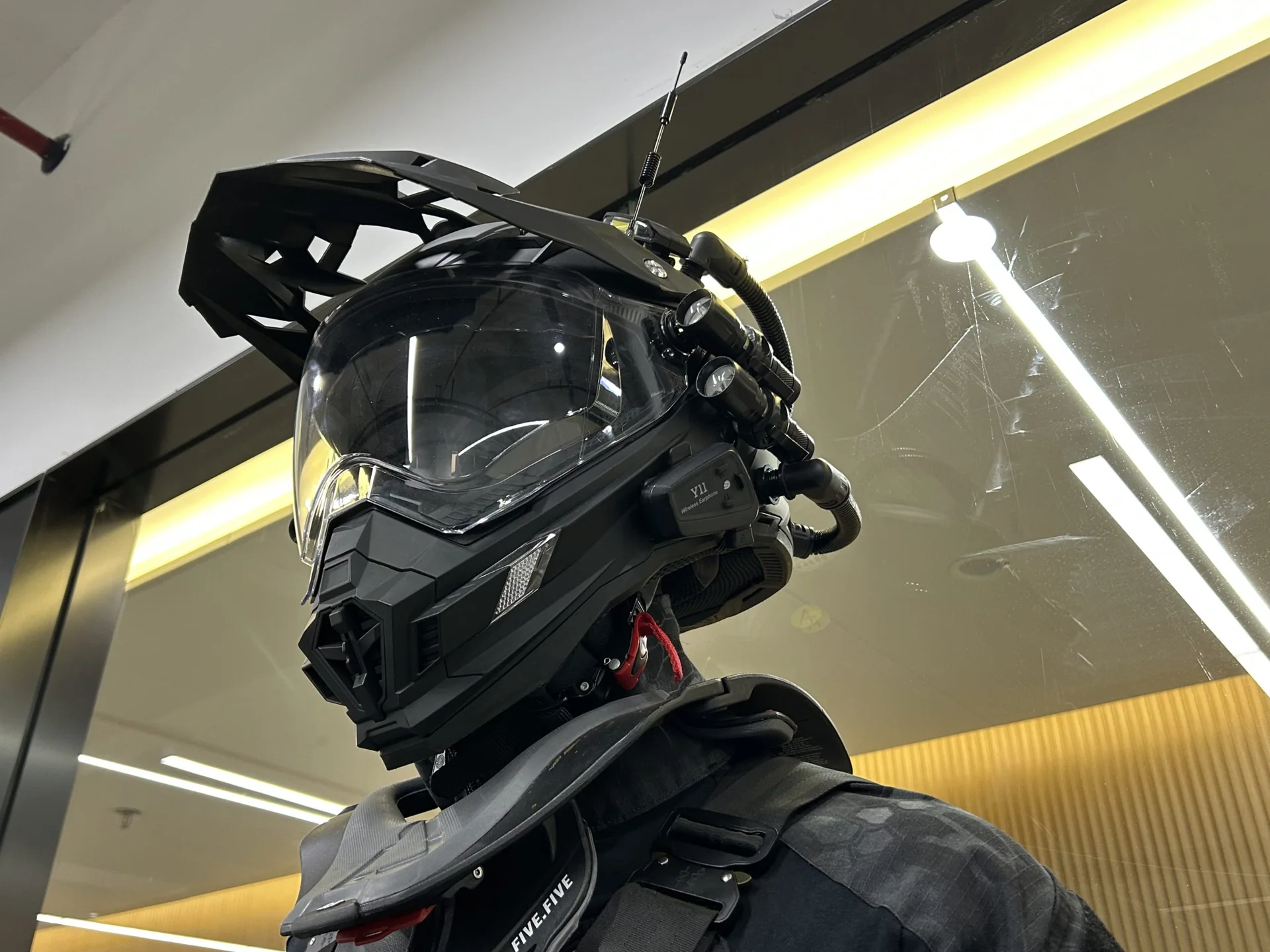
- The Integration: Coolfly eliminates this cognitive friction through its proprietary AR-HUD (Augmented Reality Head-Up Display) Safety Helmet.
- The Interface: By projecting critical telemetry—including altitude, airspeed, and real-time battery voltage—directly onto the visor’s focal plane, the system ensures that the pilot's gaze remains fixed on the horizon. This "eyes-out" philosophy doesn't just improve the experience; it is a critical safety feature that allows for instantaneous reactions to the dynamic near-ground environment.
Infrastructure Synergy: The EV-Standard Advantage
A common failure point for personal eVTOLs is the "charging silo"—the requirement for proprietary, inaccessible power hardware. Coolfly intentionally disrupts this pattern by adopting EV-standard charging interfaces.
- Universal Compatibility: By engineering the aircraft to be compatible with the global network of electric vehicle charging stations, Coolfly effectively inherits a pre-existing, massive infrastructure.
- The Practical Reality: This makes the aircraft a viable candidate for "last-mile" aerial transit. A user can fly from a suburban home to an urban CBD and recharge at a standard terminal, treating the Coolfly not as an isolated aircraft, but as a high-speed node within the broader electric mobility grid.
The Vision: Defining the Autonomous Urban Frontier
The synergy of AI-driven navigation and seamless connectivity positions Coolfly as the premier tool for the Low-Altitude Economy. It is the convergence of these smart systems—the bio-metric sensing, the AR awareness, and the universal charging—that moves personal flight out of the realm of science fiction and into the driveway of the everyday commuter.
Why This Matters: The Intersection of Part 103 and CES
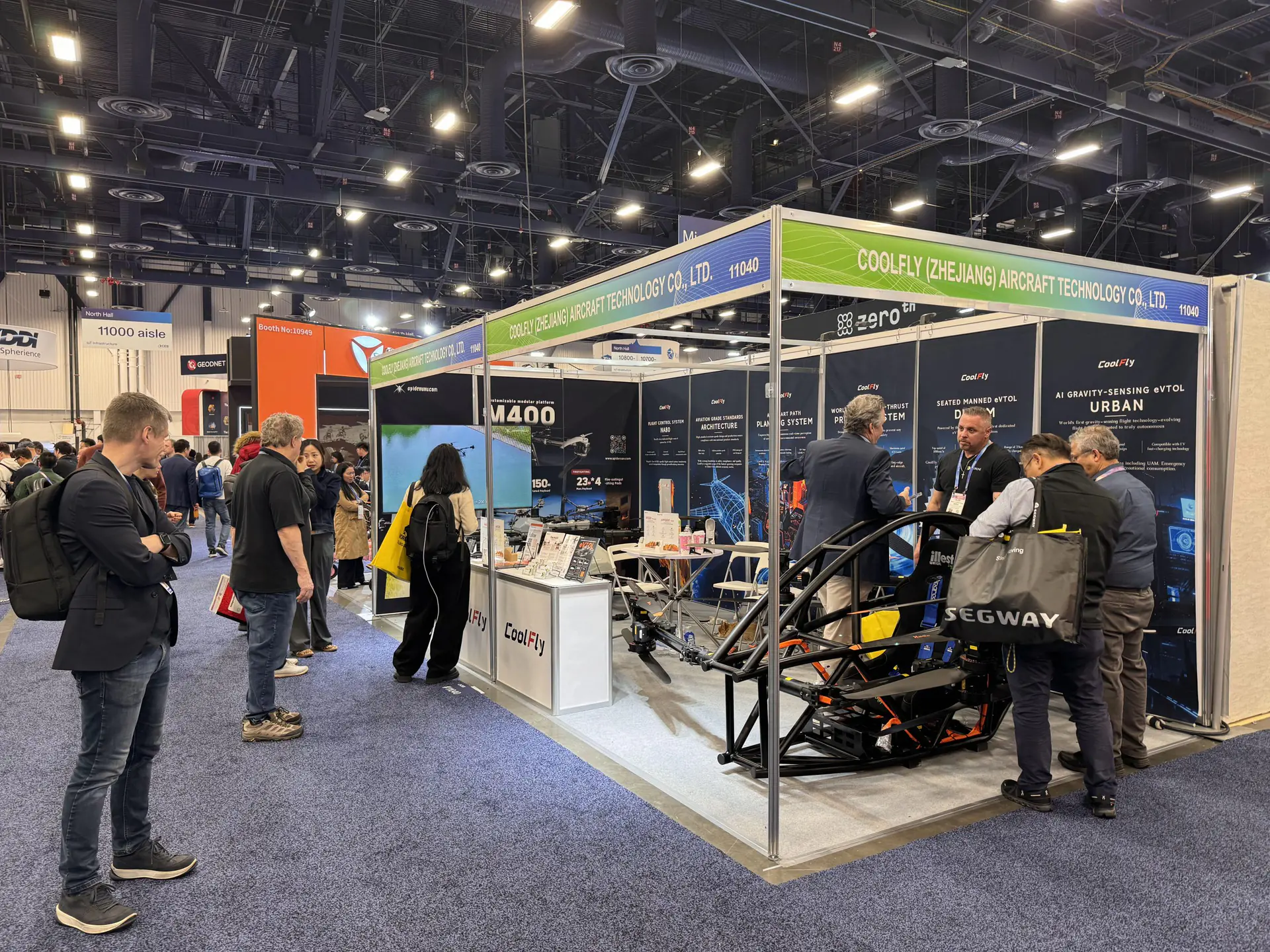
The Part 103 Strategic Alignment: Regulatory De-Friction
In the United States and increasingly in global markets following the FAA’s MOSAIC (Modernization of Special Airworthiness Certification) framework, the greatest hurdle to "personal flight" isn't technology—it's the license.
- The "Ultralight" Advantage: By meticulously engineering the aircraft to adhere to Part 103 weight and performance constraints, Coolfly has effectively removed the requirement for a formal pilot’s license.
- Democratizing the Sky: This is a fundamental "Why" for the brand. This alignment transforms the aircraft from a high-barrier aviation asset into an accessible consumer mobility tool. It allows the hobbyist, the urban commuter, and the search-and-rescue responder to bypass months of certification and enter the low-altitude economy immediately.
The Economic Threshold: Breaking the "Luxury Barrier"
Historically, manned flight has been an elite privilege due to staggering acquisition and maintenance costs. Coolfly is disrupting this through a transition from artisanal assembly to automated mass production.
- Target Valuation: With a strategic objective to bring the unit cost below $100,000, Coolfly is moving the needle from "aviation pricing" to "automotive pricing."
- Market Implication: At this price point, the aircraft ceases to be an extravagant novelty and becomes a viable "last-mile" transit solution. For the price of a mid-range motorcycle or a high-end UTV, users gain access to a third dimension of movement.
The Freedom of the 30-Meter Frontier
The convergence of Part 103 compliance and mass-market affordability creates a "perfect storm" for the low-altitude economy. While other eVTOL manufacturers are mired in the complexities of Part 23 commercial air taxi certification, Coolfly is claiming the under-30-meter near-ground space.
By solving the "Why"—making flight both legally and financially accessible—Coolfly is not just unveiling a new aircraft at CES; they are initiating the era of Total Mobility. The sky is no longer a restricted ceiling; it is an open corridor, finally available to everyone.
At last,
the second-generation CoolFly standing aircraft is far more than a sum of its components; it is a sophisticated synthesis of artificial intelligence, material science, and high-fidelity redundancy. By replacing the traditional cognitive burden of piloting with the elegance of gravity-sensing intuition, it effectively demystifies the "complexity problem" that has long throttled the personal aviation sector.
The transition from 2D congestion to 3D urban mobility is no longer a distant theoretical milestone—it is a functional reality.
As we move beyond the era of the cockpit and into the age of the "Personal Flying", the definition of a "commute" has been fundamentally rewritten. CoolFly has successfully moved flight out of the specialized hangar and into the personal warehouse.
The horizon is no longer a boundary; it is your new corridor. The era of intuitive, personal flight has officially arrived. Are you ready to transcend the ground?
Technical Specifications at a Glance:
- Max Speed: 120 km/h
- Flight Time: 25-40 minutes
- Material: T800 Carbon Fiber
- Control: AI Gravity-Sensing (Hands-Free)
- Safety: Triple-redundant IMU + Airbag Suit + Parachute
For partnership inquiries or technical whitepapers, visit our coolflyaircraft.com.